
 简体中文
 Italiano
 Português
 Español
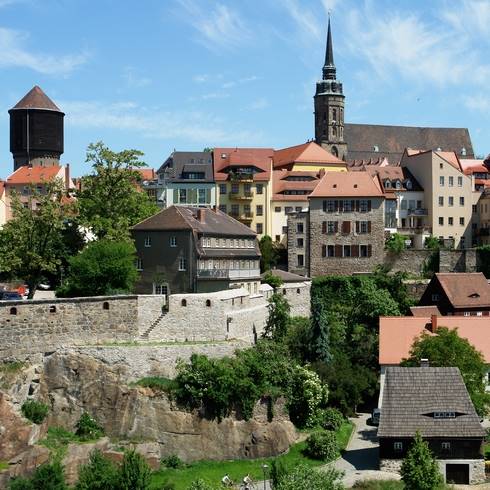
Germany is one of the largest markets of Europe, but also a conservative one and difficult to penetrate from abroad.
As of 2024, Germany’s population is estimated at about 83.25 million people. This represents a slight decrease in population growth, with a density of approximately 239 people per square kilometer. The country has also experienced significant immigration, including a substantial influx of refugees.
Germany is a major global economic player, renowned for its industrial output and robust economy. The country has a strong focus on manufacturing and export, especially in the automotive and machinery sectors.
SELLING TO BUSINESSES IN GERMANY
Germany is home to tens of thousands of businesses ranging from small sole proprietorships to large conglomerates. In fact, a large part of the reason for the prominence of Germany’s economy on the world stage can be linked to the small and medium sized businesses (SMEs) of the Mittelstand. So be prepared for smaller and mid-sized companies with a family member as the director and a long-term vision.
STRUCTURE OF GERMAN BUSINESSES
Most German companies empower a few senior managers. Larger companies (AG & GmbH) are governed by a Supervisory Board (Aufsichtsrat) which chooses the Management Board (Vorstand). The management board however is the final decision-maker on matters affecting day to day management.
Work and personal lives are rigidly divided, and Germans subscribe to the ideal that there is a proper time and place for every activity. Talking about personal subjects and politics should be avoided, and the focus should be on work-related things, even in the limited small-talk.
BUSINESS ETIQUETTE AND PROTOCOL IN GERMANY
- Germans do not think a personal relationship is needed to do business.
- They will check your academic credentials and the life span of your company.
- Germans respect authority, so acquaint them with your seniority level.
- Germans do not encourage an open-door policy- please knock before entering a meeting.
- German prefer formal communication.
- Follow the protocol is to build and maintain business relationships.
- Germans take hyperbole, big promises with a pinch of salt.
- Germans are direct and can be even blunt.
INTERNATIONAL BUSINESS MEETINGS IN GERMANY
As Germans are very focused on efficiency, meetings may only be scheduled for half an hour and only then if it is clear what the purpose of the meeting will be. This requires a very clear and focused approach, in which you show that you have found out already something about the company and its challenges. Slogans are disregarded, proof is important.
Germans place a high priority on academic and technical education and business houses value the same. Mostly, companies are run by technocrats rather than lawyers and accountants. Meetings are often large with a designated specialist from each area involved in the matter under discussion. People are expected to contribute to the debate when discussions touch their area of expertise but are not necessarily expected to have an opinion on everything.
WHAT ARE NEGOTIATION TACTICS IN GERMANY?
- Generate your strategy in advance and communicate it to others
- You can conduct a group session for the sake of clarity of thoughts
- Prepare all resources in advance
- Keep your presentations formal and straight to the point
- Give examples and facts for clear insight
- You might want to hire a German translator to help you with writing materials
- Be punctual at all costs
Trade shows in Germany
Germany has many trade shows which are an excellent way to showcase your products and to orient yourself on the market. However, due to the sheer size of these shows chances are small that a purchasing manager or decision maker will accidentally visit your booth. A dedicated business development approach may yield more results for substantially less than the costs of a booth.
If you decide to have your booth at a German trade show, be well prepared and have your message tailored to the European and especially German visitors. It might be a good idea to contact relevant prospects in advance and invite them to your booth.