 العربية
 简体中文
 Français
 Deutsch
 Italiano
 Español
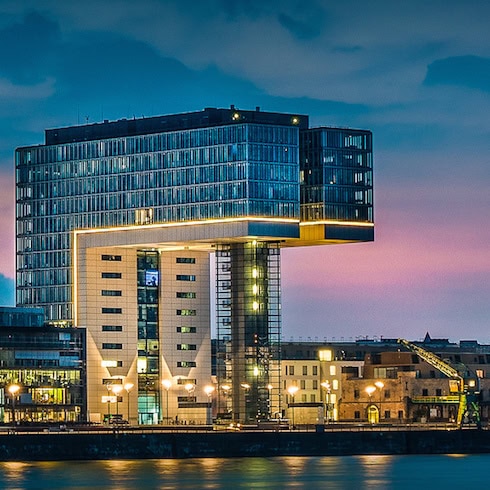
Germany is one of the largest markets of Europe, but also a conservative one and difficult to penetrate from abroad.
Germany has about 83.6 million inhabitants. Deaths have outnumbered births for years, so the population only grows through migration, and it is ageing: more than a fifth of consumers are over 65. Purchasing power is high, but German shoppers are famously price-conscious — discounters take roughly 40% of grocery spending.
Germany is a major global economic player, renowned for its industrial output and robust economy. The country has a strong focus on manufacturing and export, especially in the automotive and machinery sectors.
Germany is home to several large cities, with Berlin being the largest, followed by Hamburg and Munich. The country also has a large number of smaller cities and towns, with a total of 82 cities having populations of more than 100,000 people.
More about German distribution channels
Germany’s distribution structure is characterised by:
- a large number of small independent shops
- low levels of concentration, other other countries have much more retail chains
- the predominance of distribution in city centers and urban areas
- few “hypermarket” style stores
This forces any new supplier to work through mostly regional distributors, in order to get sufficient penetration. An agent or importer may be needed to service them all.
It may be wise to focus first on one region in Germany, or to concentrate with more high-end products in the major cities of the country.
Top-5 supermarkets in Germany
Edeka is the largest food retailer, with a group turnover of €84.7 billion in 2025, of which €77.3 billion in Germany, across some 10,900 stores under the Edeka, Marktkauf and Netto banners. Edeka is a cooperative of independent merchants, which means regional buying decisions matter as much as the national head office.
REWE Group follows with €70.6 billion in 2025, operating REWE, Penny and nahkauf alongside a large wholesale and travel business.
Schwarz Group, the owner of Lidl and Kaufland, reached €61.3 billion in Germany in 2025. Kaufland alone did €36.7 billion worldwide, of which about €24.4 billion in Germany.
Aldi, counting Aldi Nord and Aldi Süd together, is at roughly €36.9 billion: Aldi Süd about €19.1 billion across 2,021 stores, Aldi Nord about €14.6 billion.
The twenty-five largest food retailers grew by an average of 2.8% in 2025, barely above inflation. Growth therefore comes from taking share, not from a growing market, and a new supplier has to show a retailer why a listing is worth the space of an existing product.
Trade shows in Germany
Germany has many trade shows which are an excellent way to showcase your products and to orient yourself on the market. However, due to the sheer size of these shows chances are small that a purchasing manager of a major chain will accidentally visit your booth. A dedicated distributor search, preferably in another moment of the year, may yield more results for substantially less than the costs of a booth.
If you decide to have your booth at a German trade show, be well prepared and have your message tailored to the European and especially German visitors. It might be a good idea to contact relevant distribution channels in advance and invite them to your booth.